
How Do Porta Potties Work?
Under the seat sits a holding tank, and every unit we place in Columbus runs the same basic setup: waste drops into the tank, a chemical packet or liquid treatment breaks down solid material, and a vent stack pulls odor up and out rather than back into the stall. No flush, no water tank, no plumbing. That's what makes a standard porta potty rental work on a raw job site where the nearest water line is blocks away. A typical unit stands about 92 inches tall and measures roughly 44 by 48 inches on the ground, small enough to fit on a trailer pad or tuck against a fence line. For anyone comparing options before they order, our porta potty rental cost page breaks down what drives the price, and the porta potty placement guide covers where a unit can and can't go on your lot. Servicing means a technician vacuums the tank, rinses it, and redoses the chemical, following the same weekly rhythm described in ANSI/PSAI Z4.3, the industry standard that treats one visit a week as the baseline for a unit seeing typical use.
How Do Flushable Porta Potties Work?
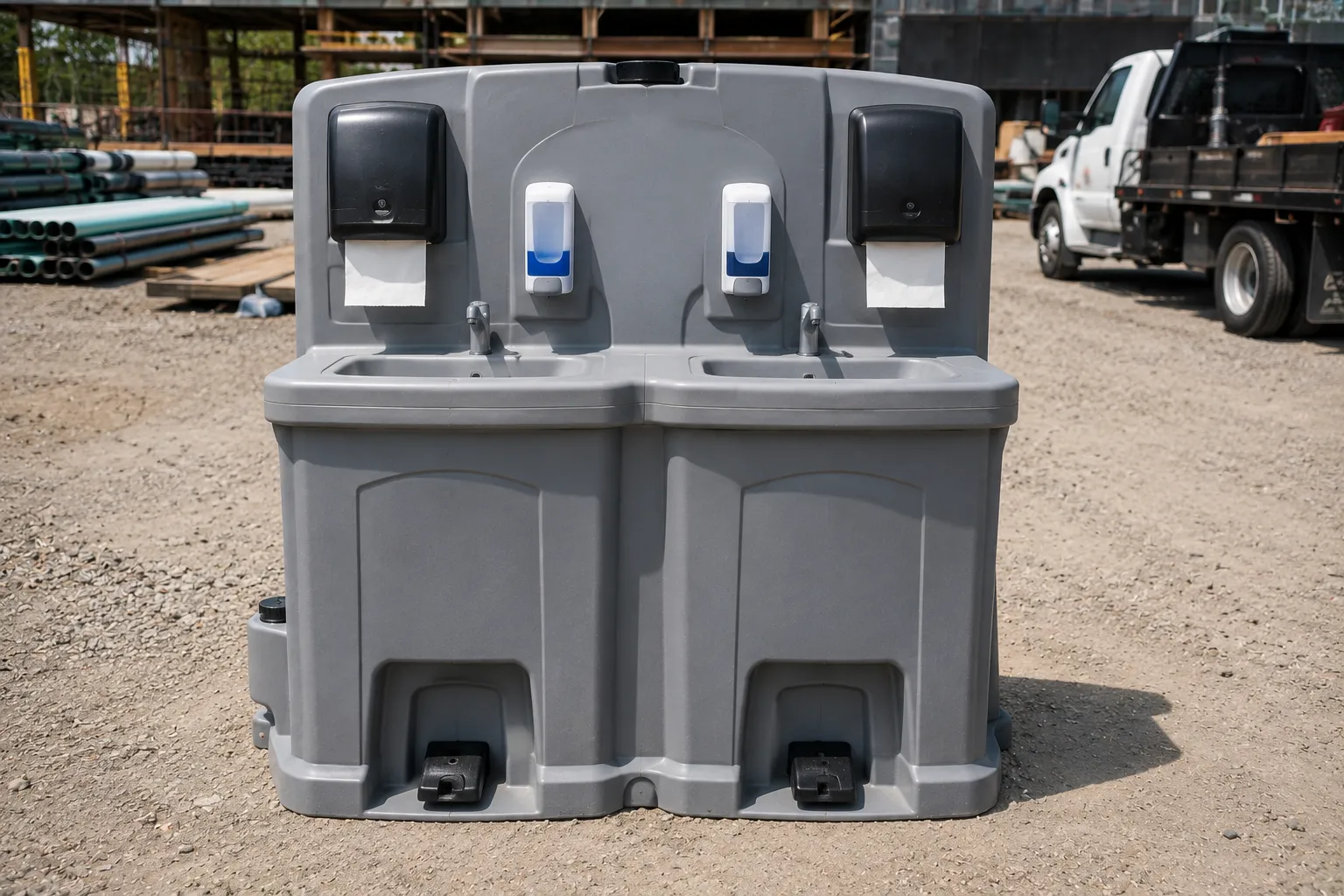
A flushable unit adds a small onboard freshwater tank and a foot pump or lever that pushes a rinse of water through the bowl after each use, same as a garden hose sprayer, not a full plumbing flush. The waste still drops into a holding tank below, just like a standard unit, but the bowl stays cleaner between service days. That's the difference our deluxe flushable porta potty line offers over a standard model, and it's a common upgrade for weddings and backyard renovation jobs where guests expect something closer to a home bathroom. Some renters pair a flushable unit with a portable sink rental, which works on the same idea. A foot pump or hand crank pulls water from a clean tank on one side, and gray water drains into a separate tank on the other, so nothing goes into the ground. It's a self-contained loop, not a hookup. For sites needing both, a handwashing station rental can sit right next to the toilet bank so workers don't have to walk far between the two.
Why Do Construction Sites Need Porta Potties?
OSHA requires it. Under 1926.51(c), a construction site needs one toilet facility for every 20 workers or fewer, scaling up to one toilet seat and one urinal per 40 workers once the crew passes 20, and one per 50 once it hits 200 or more. That's the math behind our how many porta potties do I need guide, and it's why a construction worker running to the porta potty at lunch isn't optional planning, it's a headcount problem with a legal answer. OSHA 1926.51(a)(1) also requires an adequate supply of potable water on site, which is separate from the toilet requirement but often gets solved with the same delivery. If your crew is spraying paint, coatings, herbicides or insecticides, OSHA 1926.51(f)(1) kicks in a washing facility requirement on top of the toilet count. Farms hiring hand labor fall under a different rule, OSHA 1928.110, which calls for one facility per 20 employees within a quarter mile walk. Our construction site services page and OSHA portable toilet requirements page both walk through the math for a specific crew size, and farm and agricultural restrooms covers the field-specific version.
Where Does the Waste Go and What About Septic Chemicals?
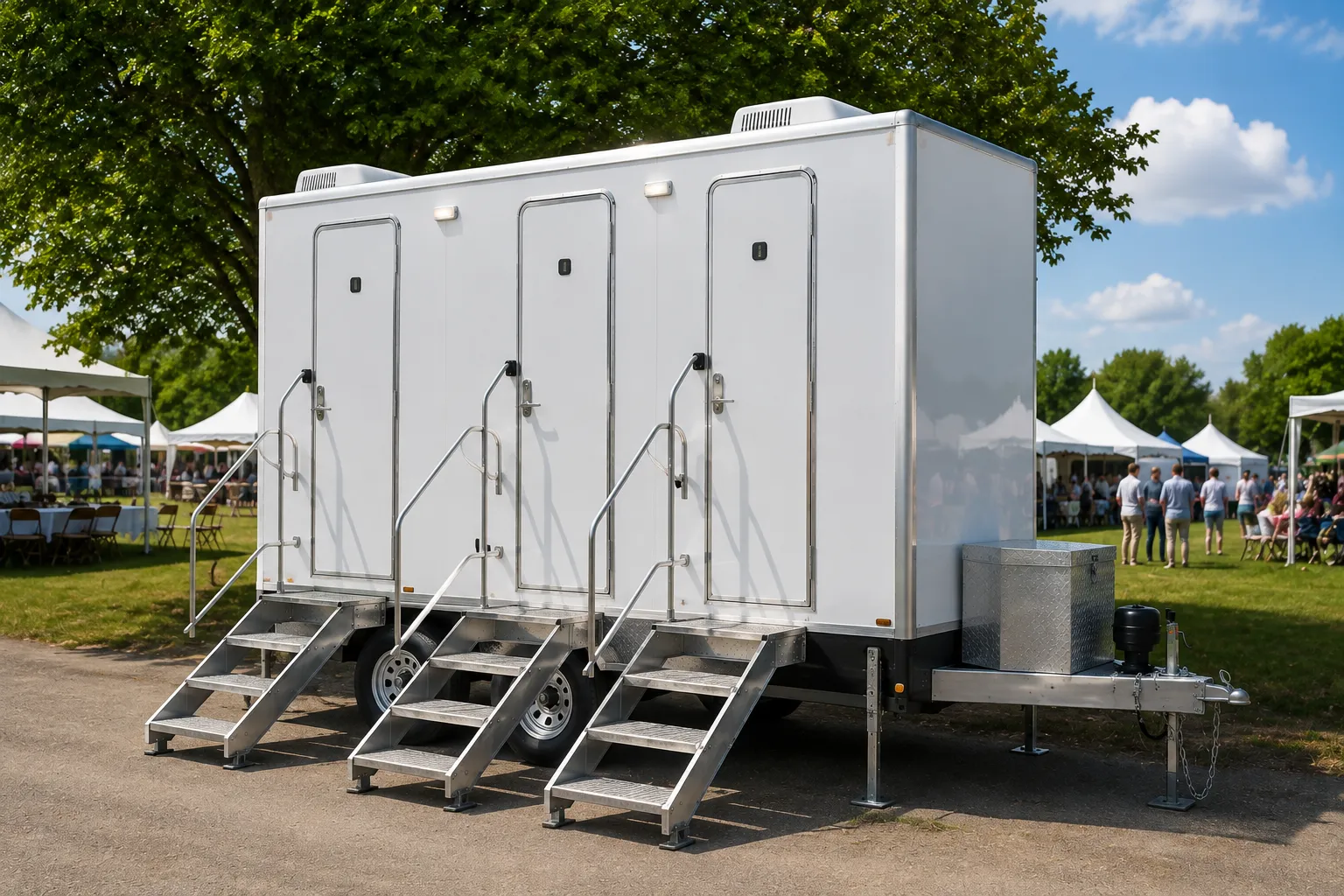
Every tank gets pumped out by a service truck and the waste is hauled off, not dumped on site. That's a different chemistry problem than a home septic tank, which uses natural bacteria to break down solids over years. A residential septic tank in Columbus typically needs pumping every 3 to 5 years depending on tank size and household size, and using aggressive septic tank cleaning chemicals can actually kill the bacteria your tank depends on, which is one reason a lot of homeowners just call for septic pumping service instead of dosing the tank themselves. Portable toilets use a different, milder chemical formulated for a sealed tank with no bacteria to protect. If your home tank hasn't been serviced in a while, septic tank warning signs covers what to watch for, and how often to pump a septic tank goes deeper on timing. Restaurants dealing with grease buildup have their own rule of thumb: a grease interceptor gets pumped once fats, oils, grease and solids reach 25 percent of the liquid depth, which is covered on our grease trap pumping page.
Do camping porta potties work differently?
Not really, they're just smaller. A camping-style unit uses the same tank-and-chemical setup as a job site unit, scaled down for lower use volume. Placement matters more outdoors, since ground has to be level and stable. See camping porta potty for setup details specific to remote sites.
How often are porta potties serviced?
Weekly is standard for typical use, per the ANSI/PSAI Z4.3 baseline for up to 10 users over a 40 hour week. High-traffic events need more frequent visits. Our how often are porta potties cleaned page breaks down the schedule by event size and crew count.
Do porta potties smell?
Some odor is normal, especially in warm weather, but a well-serviced unit with fresh chemical shouldn't smell strongly. Ventilation stacks pull odor away from the seat. Full details on what controls smell live on do porta potties smell.
Are portable toilets ADA accessible?
Standard units aren't, but accessible units are available and required in some cluster setups. ADA Standards section 213.2 calls for at least 5 percent of clustered units to be accessible, never fewer than one. See ADA accessible porta potty for specs.
Can I place a porta potty on a Columbus street or sidewalk?
Placement in the public right-of-way in Columbus needs confirming with the city; Chapter 903 covers occupancy permits for construction-related items but doesn't name portable toilets specifically. Check porta potty permit requirements before you place one curbside.
Next step
Get a delivery date
Tell us the address, the dates and the headcount. We size the order and confirm the route.