
How many portable toilets does a county fair need?
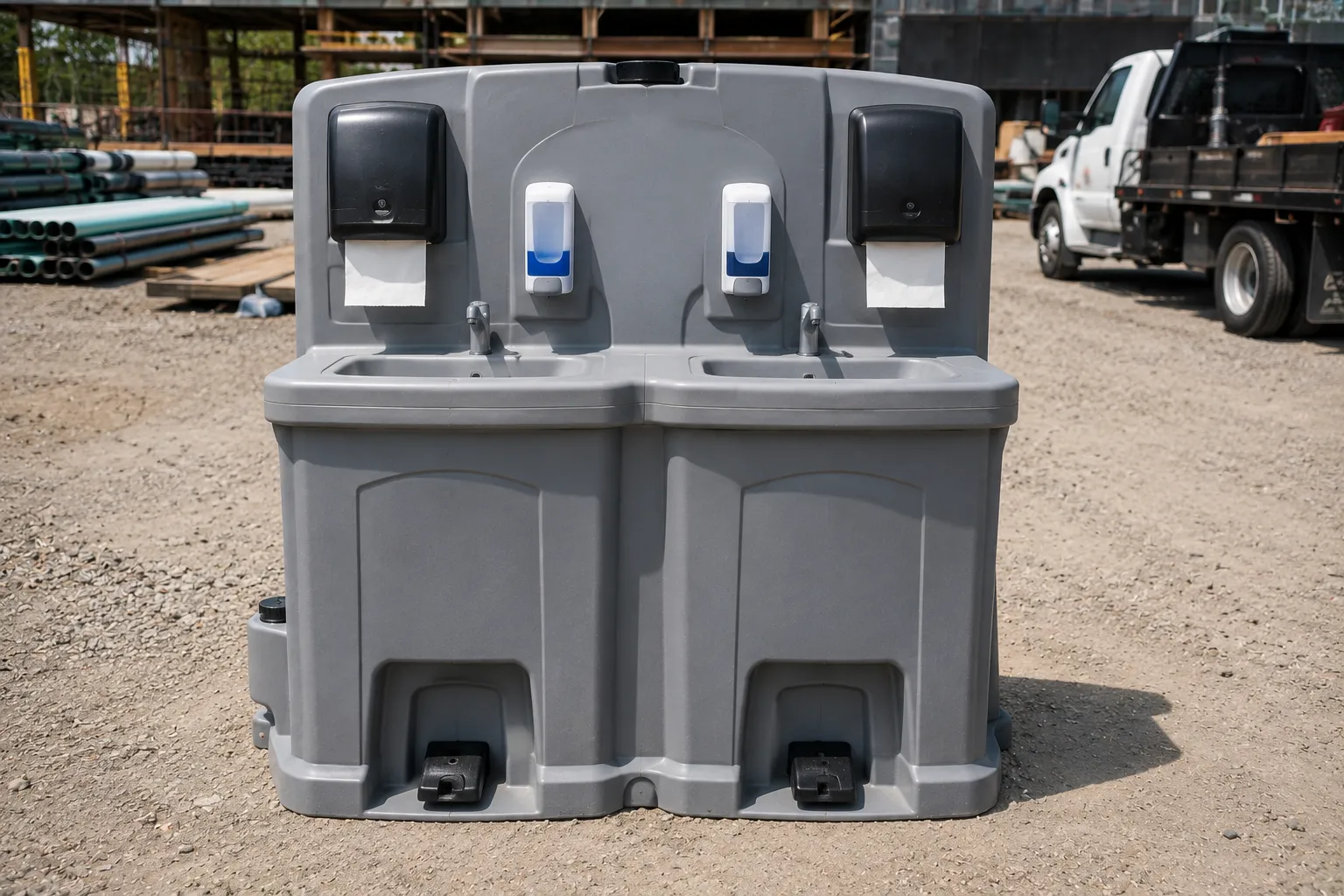
Gate count drives the number, and it drives it more than anything else on the porta potty rental order form. A fair pulling a few thousand people a day needs a bigger cluster than a single-vendor market, and Citywide Porta Potty works from your expected daily attendance, not the size of the grounds. Our how many porta potties do I need guide walks through the math, but the short version: more units beat fewer, because a long line at a fair reads as a bad fair. Pair standard units with at least one ADA accessible porta potty per cluster, since ADA Standards section 213.2 requires at least 5 percent of clustered single-user units to be accessible, and never fewer than one. Each standard unit carries a 60 to 70 gallon holding tank, which matters on a multi-day fair schedule because service crews need to know tank capacity against expected daily use before they set a pump-out route. If your fair runs food vendors doing any spray cleaning or pest treatment, OSHA 1926.51(f)(1) requires washing facilities for workers applying paints, coatings, herbicides or insecticides, so plan a handwashing station rental near that area specifically, not just at the restroom cluster. For fairs with a beer garden or a raised stage, a restroom trailer rental gives guests flushing fixtures and running water instead of a standard unit, and a 4 stall restroom trailer handles a moderate crowd without the line pressure of single units.
Where should restrooms go on fairgrounds?
Restrooms belong near the biggest foot traffic pulls: the midway entrance, the grandstand, and the livestock barns, spread far enough apart that no one walks more than a couple minutes to reach one. ADA Standards section 403.5.1 sets a 36 inch minimum clear width for the accessible route to each unit, and ADA Standards section 405.2 caps ramp slope at 1:12 if the ground isn't flat, both of which matter on fairgrounds with gravel paths or graded lots. Our porta potty placement guide covers ground stability too: ADA Standards section 302.1 calls for surfaces that are stable, firm and slip resistant, which rules out soft turf as a placement spot without matting. A deluxe flushable porta potty near the grandstand adds a step up from standard units for VIP ticket holders. If the fair sits on or crosses public right-of-way in Columbus, Chapter 903 of Columbus City Code requires an occupancy permit for anything placed there for construction-related purposes, issued through the Department of Public Service; whether that rule extends to portable toilets specifically hasn't been confirmed in the city documents we reviewed, so check placement against public right-of-way with the city before locking the layout. Our porta potty permit requirements page has more on what to ask. For grounds needing crowd separation between the midway and parking, temporary fence rental or crowd control barrier rental keeps foot traffic routed past the restroom clusters instead of around them.
What does county fair restroom rental cost in Columbus?
Cost scales with unit type, count, and how many days the fair runs, and multi-day fair rentals price differently than a single weekend event. A standard unit rented for a multi-day event runs in the same band as a weekend rental, while an ADA unit and a restroom trailer both carry their own separate pricing tiers, shown below.
| unit | duration | typical price |
|---|---|---|
| standard | weekend | $250 |
| standard | event | $400 |
| ada | weekend | $240 |
| dumpster | weekend | $440 |
| trailer | event | $3,500 |
Fairs generating food vendor waste or livestock bedding also need a roll-off dumpster rental on site, and OSHA 1926.25 calls for scrap and debris to be cleared from work areas regularly, which applies to backstage and vendor alleys as much as a construction lot. Delivery trucks need roughly 60 feet of straight clearance behind them to place a roll-off, so flag that clearance early if the fairgrounds layout is tight. See our dumpster rental cost and temporary fence cost pages for the rest of the site services budget. For fairs near Columbus proper, we also cover grounds in Westerville, 14.2 miles north, and Grove City, 13.6 miles southwest, at the same pricing structure.
How far in advance should I book fair restrooms?
Book as soon as your gate estimate and grounds map are set, ideally weeks out for a multi-day fair. Peak fair season in central Ohio competes for the same trailers and ADA units other events want, and Citywide Porta Potty holds inventory tighter closer to the date.
Do fairgrounds need handwashing stations separate from restrooms?
Yes, especially near food vendors and livestock areas. 29 CFR 1910.141(d)(2) requires washing facilities stocked with soap and towels or a hand drying device; hand sanitizer alone doesn't satisfy it. See handwashing station requirements for placement specifics.
Can Citywide Porta Potty service units mid-fair?
Yes. Multi-day fairs need scheduled pump-outs and restocking, not just a one-time drop. ANSI/PSAI Z4.3 sets a baseline of one service visit per week for lighter use, but fair-day crowds usually need daily service instead.
What size restroom trailer fits a county fair?
Depends on daily attendance and whether there's a beer garden or grandstand crowd. An 8 stall restroom trailer suits a larger multi-day fair, while a 2 stall restroom trailer works for a small vendor row.
Does the fairgrounds location affect permit requirements?
It can. Public right-of-way placement in Columbus falls under Chapter 903, administered by the Department of Public Service. Fairgrounds set back from public streets typically avoid that question entirely, but confirm with the city before finalizing layout.
Next step
Get a delivery date
Tell us the address, the dates and the headcount. We size the order and confirm the route.