
What items are banned from a roll-off dumpster?
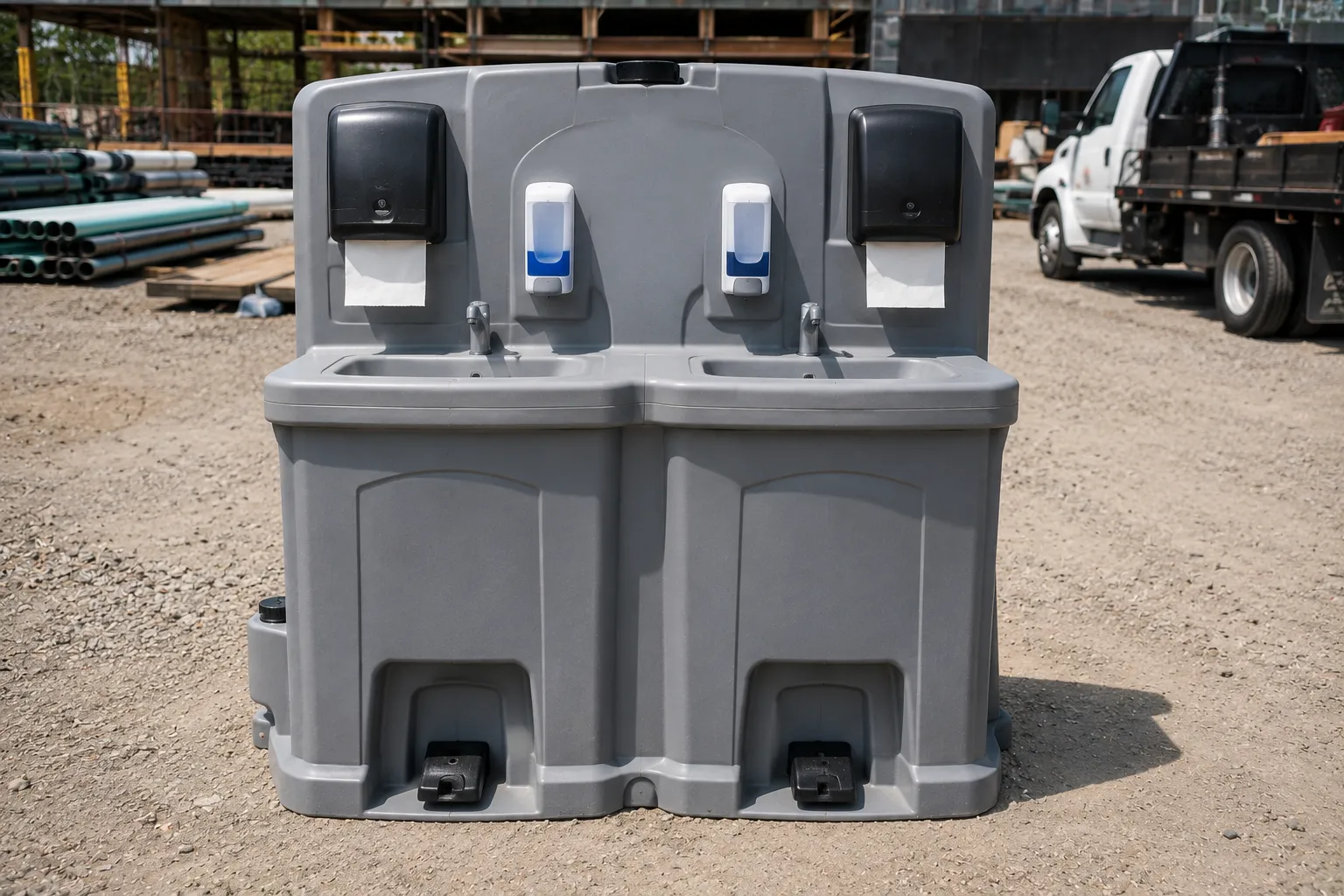
Hazardous waste tops the list: paint cans with liquid still in them, solvents, pesticides, herbicides, and anything with a flammable label. Freon-containing appliances, like refrigerators and window AC units, need refrigerant recovery first. Car batteries, propane tanks and motor oil are refused almost everywhere because they contaminate the load and put haulers at risk. Tires usually get turned away too, along with asbestos siding or insulation, which needs a licensed abatement contractor, not a dumpster. Electronics with lead or mercury, like old TVs and monitors, are commonly restricted as well. If your Columbus job involves painting, coating, or applying herbicide or insecticide, OSHA 1926.51(f)(1) requires washing facilities on site for the crew handling that work, separate from whatever you do with the leftover material. A handwashing station rental or portable sink rental covers that requirement cheaply. For the disposal side, check our what cannot go in a dumpster guidance against your specific material before the container shows up, and ask about dumpster weight limits too, since banned items and overweight loads get flagged at the same gate.
Why does the city care what's in the dumpster?
Because a dumpster sitting in the right-of-way is regulated property, not just a container. Columbus City Code Chapter 903 requires an occupancy permit for any dumpster placed in the public right-of-way, issued through the Department of Public Service Right-of-Way Permit Section at the Michael B. Coleman Government Center, 111 N. Front St. That permit is normally good for seven days unless a longer term gets approved in advance, and if the container sits on a metered parking space, the meter fee applies on top. See dumpster permit requirements for the full picture and check porta potty permit requirements if you're also placing a toilet in that same stretch of curb, since placement of a portable toilet specifically in the right-of-way still needs confirming with the city. A dumpster loaded with banned material is more likely to draw attention during that permitted period, and that's the last thing a Columbus job site needs mid-project.
Can construction debris and household junk go in the same container?
Mostly yes, with exceptions. Drywall, lumber, shingles and concrete are standard construction debris and fine for a construction dumpster rental. Household junk like furniture, carpet and general trash usually rides along fine too. The line gets drawn at anything hazardous, anything with fluids still in it, and anything too heavy for the box. A 10 yard dumpster rental suits a single-room cleanout, while a 20 yard dumpster rental or 30 yard dumpster rental handles a full renovation; a 40 yard dumpster rental is for teardown-scale work. Check dumpster sizes and dimensions before ordering, and remember a roll-off delivery needs about 60 feet of straight clearance behind the truck to set the container down safely. Mixing in banned material, even a single car battery, can get the whole load rejected regardless of size.
Where do septic and grease waste actually go?
Not in a dumpster, ever. Septic and grease trap waste is liquid, regulated separately, and handled by a vacuum truck, not a roll-off box. A residential septic tank is typically pumped every 3 to 5 years depending on tank size and household size, and that's a job for septic pumping service, not roll-off dumpster rental. Restaurants and commercial kitchens need grease trap pumping once fats, oils, grease and solids reach 25 percent of the liquid depth in the interceptor. In Ohio, septage haulers register with the local health district under Ohio Administrative Code Rule 3701-29-03, and land application of that septage has to follow 40 CFR 503. Columbus sits across Franklin, Delaware and Fairfield counties, so which health district applies depends on the job site. If you need a temporary holding option instead of pumping, look at holding tank rental, and for backups after hours, emergency septic service is the faster route than waiting on a scheduled pump-out.
| service | typical use | where to start |
|---|---|---|
| roll-off dumpster | construction debris, cleanouts | roll-off dumpster rental |
| septic pumping | tank service every 3-5 years | septic tank pumping cost |
| grease trap pumping | restaurant interceptors | grease trap pumping |
| holding tank | temporary liquid storage | holding tank rental |
What happens if banned items are found in my dumpster?
The load can get flagged, sorted out, or rejected at the transfer station, and that delay lands on the renter's timeline. Some haulers charge a re-sort or contamination fee. Keep paint, batteries, tires and refrigerants out from the start and check what cannot go in a dumpster before loading.
Can I put old paint cans in a dumpster if they're dried out?
Fully dried, hardened paint with no liquid left is generally acceptable in most Columbus dumpsters. Wet or liquid paint is not. When in doubt, leave the lid off outside until it solidifies, or ask before loading it in.
Does a small home renovation need the same rules as a commercial job?
Yes, the banned material list doesn't change by project size. A home renovation porta potty job with a small dumpster still can't take paint, batteries or propane tanks. Size changes the container, not what's allowed inside it.
Are appliances with refrigerant allowed in a roll-off?
Not until the refrigerant is recovered by a certified technician. Refrigerators, freezers and window units need that step first. Once recovered, the empty shell is usually fine for the dumpster.
Do I need a permit if the dumpster sits on my own driveway?
Right-of-way permitting under Chapter 903 applies to placement in the public street or alley, not private property. A driveway placement generally avoids that permit, but confirm with the Department of Public Service if your driveway is close to the curb line.
Next step
Get a delivery date
Tell us the address, the dates and the headcount. We size the order and confirm the route.