
How fast can Citywide Porta Potty respond to a disaster in Columbus?
Storm damage does not wait for a normal delivery window, and neither do we. When a water main breaks or a basement floods across Franklin County, our first move is figuring out how many units you actually need and where they can sit safely. That answer looks different for a single household on a residential street than for a shelter running out of a church gym near downtown Columbus. Our emergency porta potty rental service exists for exactly this gap, when the sewer line is out and people still need a place to go.
For a household or small crew, a standard porta potty rental is usually the fastest fit, and short placements land in the standard day-rate band. Larger response efforts, like a Red Cross shelter or a multi-block outage, often need a cluster of units plus a handwashing station rental, since disaster response almost always means people eating and drinking in the same footprint where they are using the toilet. If flooding has also knocked out a septic system, our septic pumping service can pump out a compromised tank so it is not backing up into a home while the rest of the property is already underwater.
Relief work in Columbus also means working around the city's own rules for anything placed in the right-of-way. If a unit needs to sit on a public street or alley rather than a private driveway or lot, Columbus City Code Chapter 903 controls occupancy of that space, and permits are issued through the Department of Public Service, whose Right-of-Way Permit Section sits on the first floor of the Michael B. Coleman Government Center at 111 N. Front St. We have not confirmed whether portable toilets specifically are named under Chapter 903 the way dumpsters and PODs are, so if your relief site touches the right-of-way, that placement needs confirming with the city before we set anything down. Full detail on this lives on our porta potty permit requirements page.
What does disaster relief sanitation cost in Columbus?
Cost depends on how many units, how long the crisis runs, and whether the site needs anything beyond a toilet. A short flood response might only need a day or two of coverage; a longer displacement, weeks. Pricing below reflects unit type and duration, not disaster status specifically, since emergency response uses the same equipment as any other job.
| Unit | Day | Week | Month |
|---|---|---|---|
| Standard porta potty | $100 - $350 | $130 - $500 | $125 - $325 |
| ADA accessible unit | $200 - $400 | $240 - $400 | -- |
| Deluxe flushable unit | $85 - $1,200 | $150 - $290 | -- |
Delivery adds a separate fee, generally $100 to $500 for a single-day emergency drop and less per unit if the response stretches into a week or month. If your relief site needs to house people overnight, a restroom trailer rental or a shower trailer rental covers more ground than stand-alone toilets, though trailers cost considerably more and need level, stable ground to set up correctly. For anyone comparing options before committing, our porta potty rental cost page breaks down pricing further, and restroom trailer rental cost does the same for trailers.
Are portable toilets required for disaster relief shelters?
OSHA sanitation rules do not target disaster shelters directly, but if your organization is running a relief operation as a worksite with paid staff or contracted labor, OSHA 1926.51(c) still applies: one toilet facility for 20 workers or fewer, scaling up from there. Any accessible unit brought to a shelter should follow ADA Standards 213.2, which requires at least 5 percent of clustered single-user units to be accessible, and never fewer than one. Our ADA accessible porta potty page covers what that unit needs to include. For general guidance on unit counts by group size, the how many porta potties do I need page walks through the math, and OSHA portable toilet requirements covers the full standard.
Columbus sees an average of 97.7 days a year with a minimum temperature at or below freezing, so winter disaster response has its own problems: frozen tanks, icy ground, units that need extra servicing. If your relief window falls in a cold stretch, porta potty in winter has details worth reading before you place an order. We also serve nearby communities, including Whitehall 8.6 miles east and Grove City 13.6 miles southwest, if your relief effort spans more than one jurisdiction.
How quickly can you deliver during an active disaster?
Same-day delivery is our goal when road access allows it, though flooded or storm-damaged streets can slow things down. Call ahead with your address and unit count. We prioritize shelters, medical sites and multi-household outages first.
Do you provide handwashing stations along with toilets?
Yes. A portable sink rental or handwashing station pairs well with any relief deployment, especially where 29 CFR 1910.141(d)(2) applies and soap or a hand-drying device is required, not just sanitizer.
Can you service septic systems damaged by flooding?
Yes. Flooded or overloaded septic tanks often need emergency pumping to prevent backup into the home. Our emergency septic service team can assess and pump a compromised tank on short notice.
What if the relief site has no paved access?
We still need roughly 60 feet of straight clearance behind a truck for larger deliveries, but standard units can often be hand-carried short distances onto grass, gravel or damaged pavement.
Do you help with storage for relief supplies too?
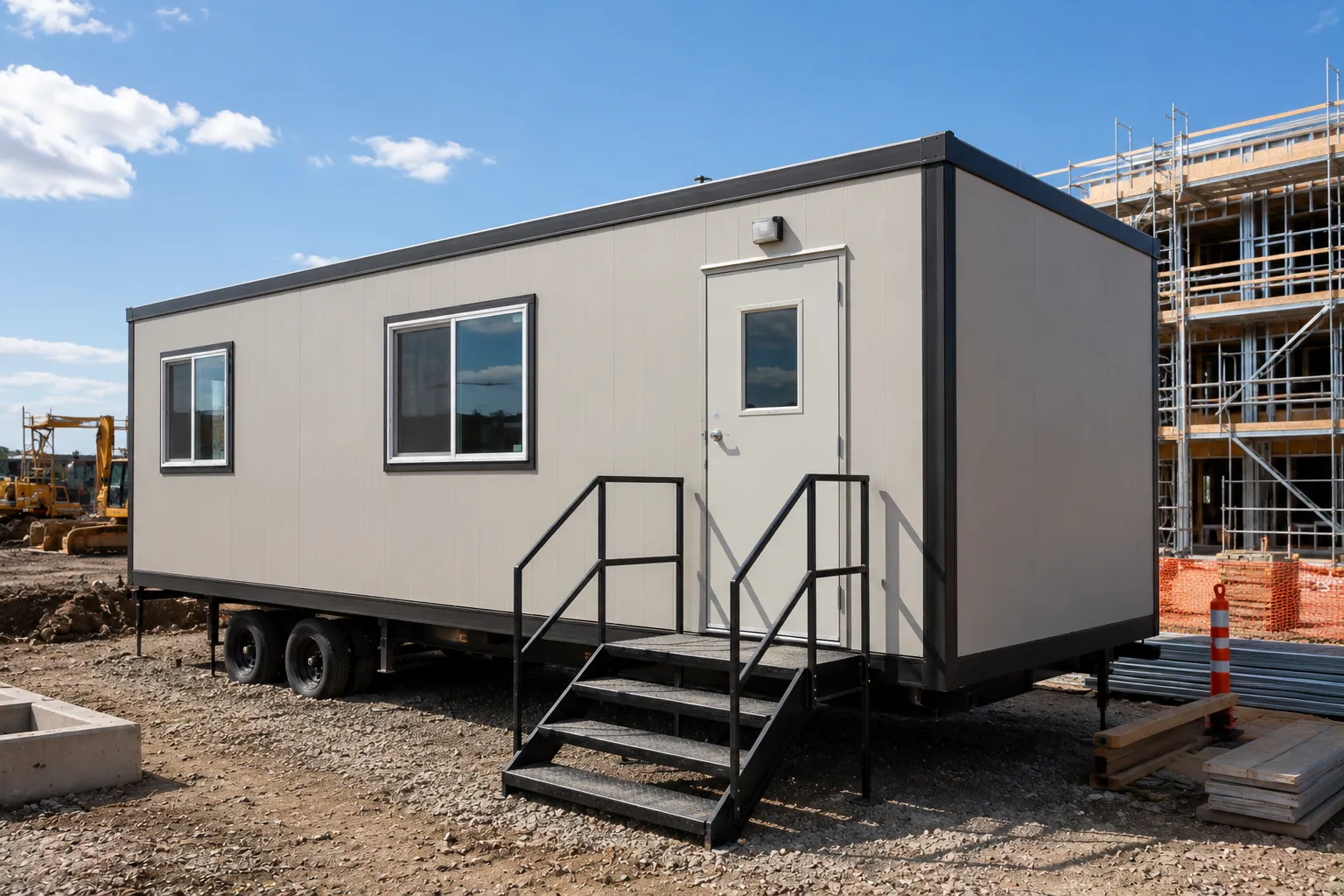
Yes. A storage container rental or mobile office trailer rental can hold donated goods, equipment or a coordination office on-site during longer response efforts.
Next step
Get a delivery date
Tell us the address, the dates and the headcount. We size the order and confirm the route.