
Do you need a permit for a porta potty in Columbus?
If the unit sits on private property, a driveway or a fenced job site, Columbus generally does not require a permit. The moment you place it in the public right-of-way, meaning any public street or alley, Chapter 903 of the Columbus City Code comes into play. That chapter was written for excavation and occupancy activity tied to construction, and the city's how-to guide names dumpsters, PODs and crane lifts by name. Portable toilets are not named anywhere in the Chapter 903 rules and regulations or the occupancy how-to PDF we reviewed. That is a genuine gap, not an oversight on our end, so treat placement in the right-of-way as something to confirm directly with the Department of Public Service before you set a unit at the curb. For most residential jobs, driveway placement covered in our porta potty placement guide sidesteps the question entirely, and those same porta potty placement rules hold whether the job is downtown or up in Delaware. If you are also renting a roll-off dumpster rental for the same job, expect that one to need the permit even if the toilet does not, and the same holds for a roll-off dumpster rental delaware job site working under a different jurisdiction's version of the same right-of-way rule.
Where do porta potty rules and regulations come from in Columbus?
Chapter 903 governs two kinds of permits: excavation permits, for digging in the right-of-way, and occupancy permits, for occupying it with equipment tied to construction. Occupancy permits are handled through the Administrator of Infrastructure Management, and the Right-of-Way Permit Section sits on the first floor of the Michael B. Coleman Government Center at 111 N. Front St. Occupancy permits for dumpsters or containers run for a seven day period unless a longer term gets approved in advance, and placing anything over a parking meter adds the meter fee on top. Chapter 906 covers a different set of non-construction uses, like moving trucks, so know which chapter actually applies before you assume the rule. None of this touches placement rules for OSHA-driven toilet counts on an active job site, which fall under OSHA portable toilet requirements instead, specifically OSHA 1926.51(c)(1): one toilet for 20 workers or fewer, one toilet and one urinal per 40 workers from 20 up, and one per 50 once you hit 200 workers. If you're pouring concrete or doing paint or coating work, 1926.51(f)(1) requires washing facilities for that contaminant exposure specifically, not general handwashing, which is a separate question from where the unit physically sits.
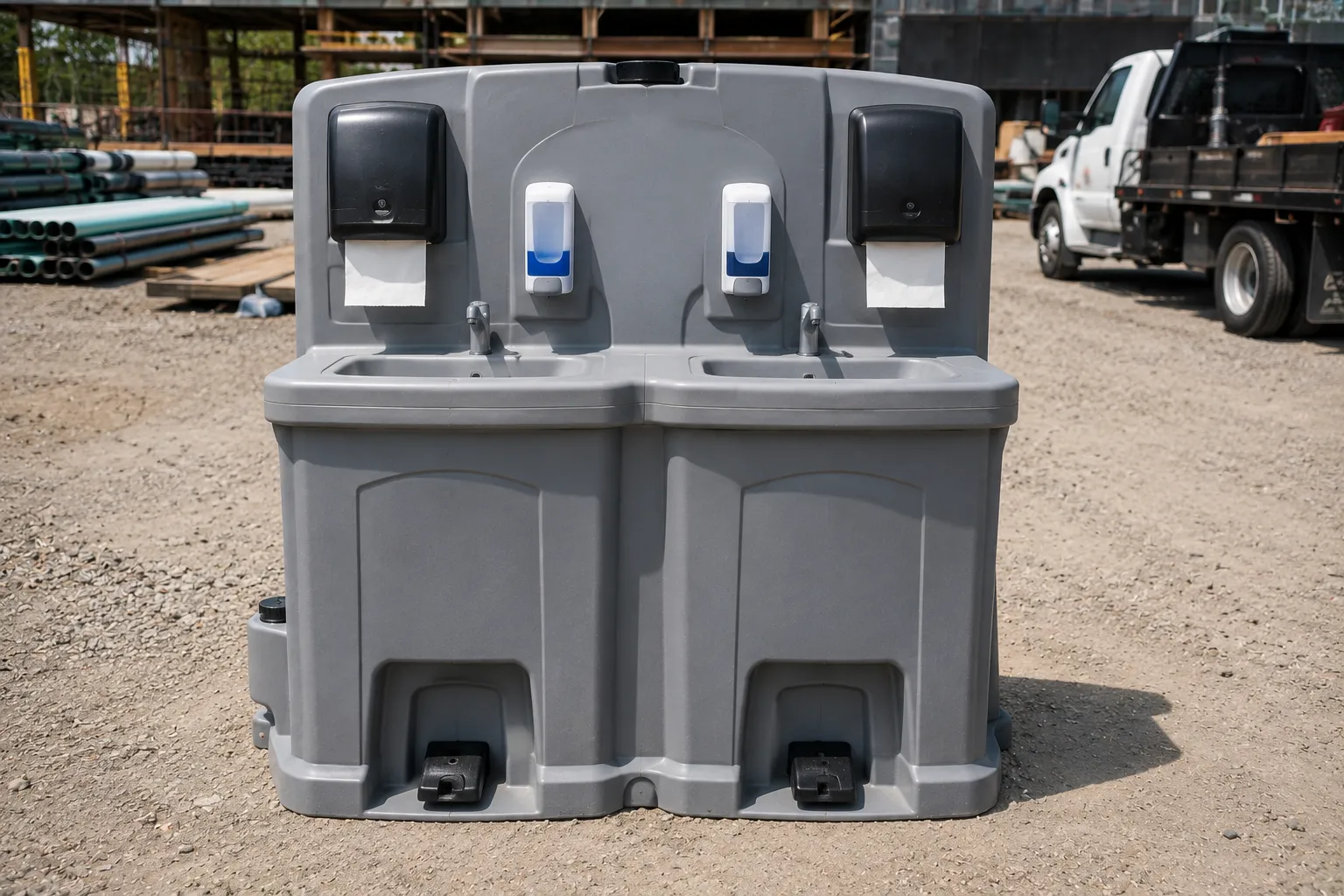
What about dumpster permits, since the same right-of-way rule applies?
Anyone placing a dumpster in the Columbus right-of-way needs an occupancy permit under Chapter 903, full stop, whether it is a 10 yard box for a bathroom remodel or a 40 yard unit on a commercial teardown. See dumpster permit requirements for the fuller breakdown, and dumpster sizes and dimensions if you are still sizing the container. A 10 yard dumpster rental sitting in a driveway avoids the permit question the same way a driveway porta potty does. A 20 yard dumpster rental or 30 yard dumpster rental parked on the street does not get that pass. Delivery trucks need roughly 60 feet of straight clearance behind the drop point, which matters whether you're in Columbus proper or out toward Grove City, 13.6 miles southwest, or Reynoldsburg, 16.8 miles east. If you're running a temporary fence rental around the dumpster or toilet for a job site, or need a temporary power pole for site power, check whether those also sit inside the right-of-way footprint, because separate equipment in the same strip of street can trigger separate permit questions, and a temporary power pole permit is a separate application from the dumpster or toilet occupancy permit even when all three sit on the same job site. Crews used to a jersey city dumpster permit process should not assume the paperwork transfers; Columbus runs its own Chapter 903 system through the Department of Public Service.
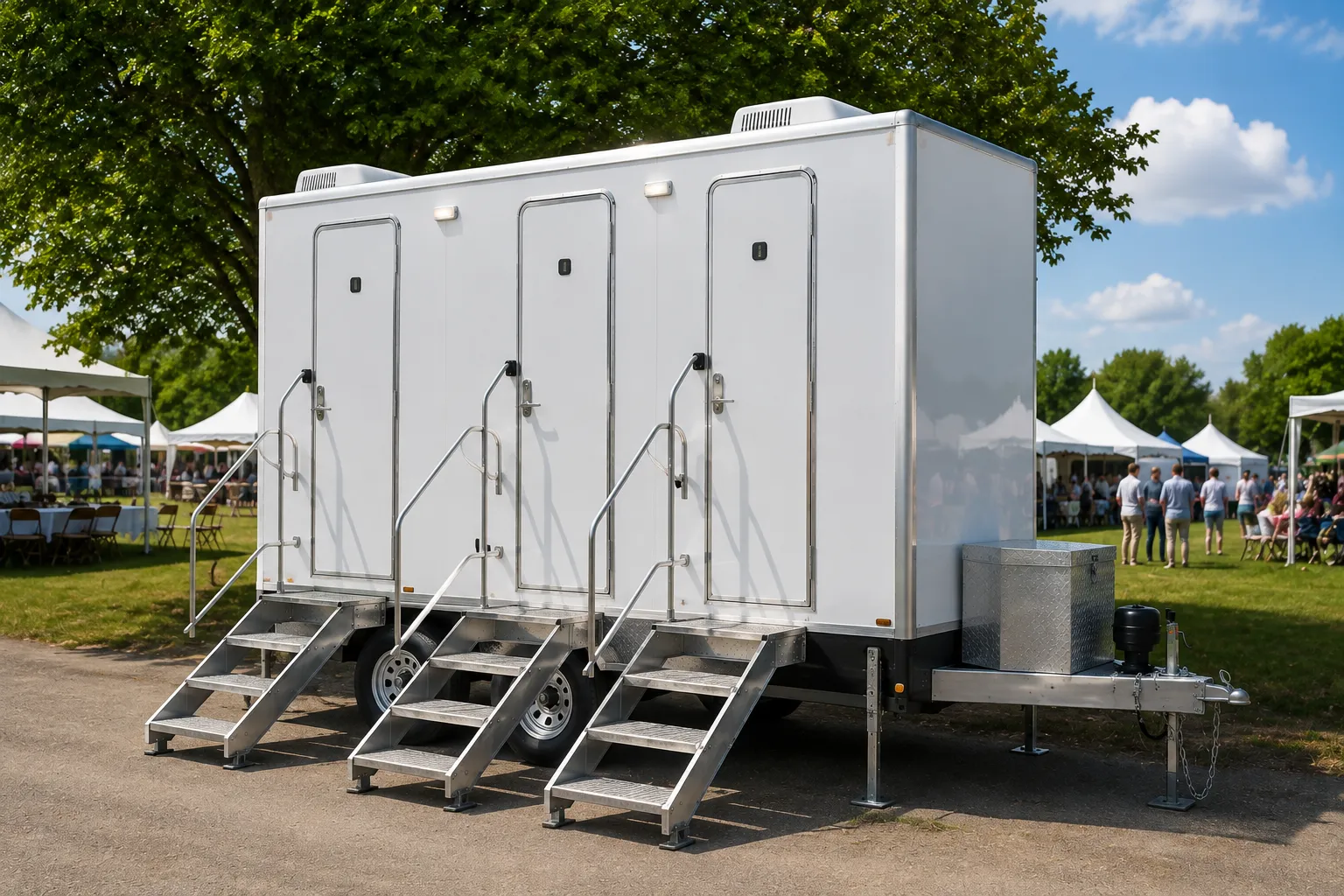
Where should I place units to avoid permit headaches?
Private property first, always. A driveway, a graveled staging area, a fenced perimeter, any of these keep you outside Chapter 903 entirely for a standard porta potty rental or a portable toilet rental. ADA-compliant placement still matters even off the street: ADA Standards 403.5.1 calls for a 36 inch clear route, and 213.2 requires that clustered units include at least one accessible unit, never fewer than 5 percent of the total. If your event or job site pulls from Dublin, 21.3 miles northwest, or Westerville, 14.2 miles north, or even Delaware, 24.7 miles north, the placement rules do not change with distance, only the drive time to service you. A porta john rental or portable restroom rental for a backyard wedding almost never touches the right-of-way question. A festival or marathon closing a public street is a different animal, and that is where event restroom rental and marathon restroom rental planning should loop in the city early.
| unit | day | week | month |
|---|---|---|---|
| standard | 100-350 | 130-500 | 125-325 |
| ada | 200-400 | 120-240 | n/a |
Pricing above is separate from any permit fee, which the city has not published in the sources we checked. See porta potty rental cost for the fuller pricing picture.
Do you need a permit for a porta potty on private property in Columbus?
No, generally not. Chapter 903 targets the public right-of-way, meaning streets and alleys, not private driveways or fenced lots. Confirm with Citywide Porta Potty when you book, since site-specific conditions can still matter.
Is a permit required for a dumpster on the street in Columbus?
Yes. Any dumpster occupying a public street or alley needs a Chapter 903 occupancy permit through the Department of Public Service, typically limited to a seven day window unless extended in advance.
How long does a Columbus occupancy permit last?
Seven days is the standard term for a dumpster or container occupancy permit unless a longer period is approved as part of the application. Confirm current terms with the Right-of-Way Permit Section downtown.
Does OSHA require a permit for job site toilets?
No. OSHA 1926.51(c)(1) sets worker-to-toilet ratios, not permitting. Permits are a city right-of-way matter; OSHA governs counts and sanitation standards on the job site itself, regardless of where the unit sits.
What if my porta potty sits over a parking meter?
The city charges the meter fee in addition to any occupancy permit cost when equipment displaces a metered space. Ask Citywide Porta Potty to flag this during placement planning to avoid a surprise charge.
Next step
Get a delivery date
Tell us the address, the dates and the headcount. We size the order and confirm the route.